
In this guide
Annual Cost Benchmarks for Florida Saltwater Boats
New boat owners relocating to or purchasing vessels along the Florida Gulf Coast often underestimate the ongoing capital required to counteract the harsh saltwater environment. Beyond initial acquisition, regular mechanical upkeep, slip or storage fees, and environmental wear form a recurring annual obligation.
Marine industry standards outline two foundational budgeting benchmarks for routine maintenance, repairs, and scheduled servicing:
Annual Maintenance Budget ≈ 10% of Vessel Purchase Price
High-Cost Area Benchmark = $1,000 to $2,000 per Foot Annually
For example, a $50,000 boat typically requires an estimated $5,000 per year dedicated strictly to maintenance and repairs before factoring in fuel. In expensive coastal markets, all-in ownership costs—encompassing routine maintenance, storage, insurance premiums, loan interest, and depreciation—can escalate to several thousand dollars per month for mid-size powerboats.
Post-Excursion Engine Care and Corrosion Prevention
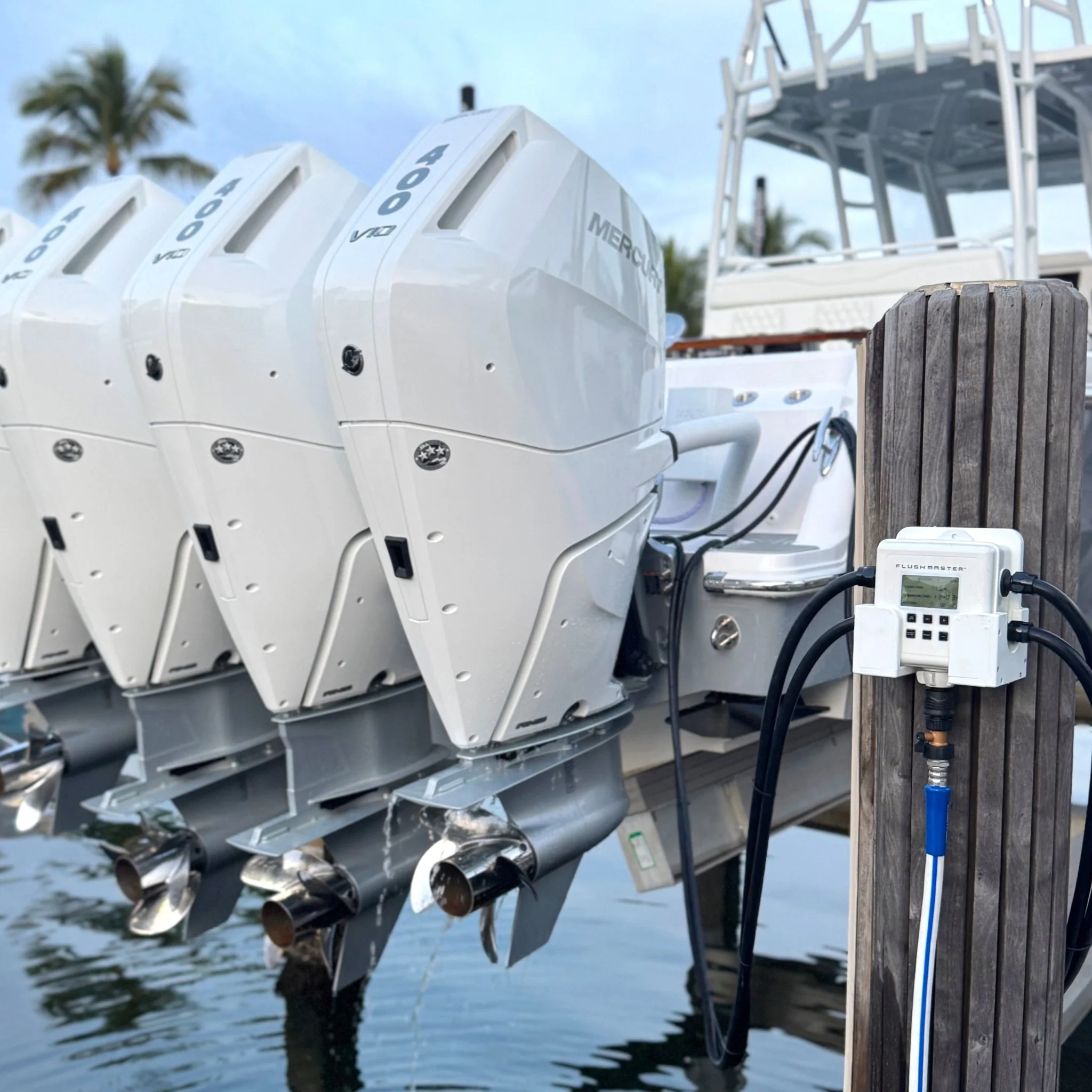
Operating outboards in saltwater accelerates salt accumulation inside internal cooling passages. Saltwater left sitting in an engine crystallizes, which can lead to clogged passages, corroded metal components, and elevated operating temperatures.
Standard Post-Saltwater Outboard Routine
- Turn off the engine and connect a freshwater hose to the engine flush port or flushing attachment.
- Flush the outboard thoroughly with clean fresh water after every excursion.
- Optionally use salt-dissolving flushing treatments designed to remove buildup and leave a protective barrier.
- Apply dedicated marine waterproof grease to lubrication points monthly to block saltwater intrusion.
Wet Slips, Marine Growth, and Haul-Out Intervals
Keeping a vessel in a wet slip across Florida Gulf Coast waters—such as Tampa Bay, St. Petersburg, Clearwater, Tierra Verde, and Gulfport—exposes the running gear and hull to severe biological fouling. Slime, algae, and barnacles readily attach to unprotected surfaces, degrading performance and increasing fuel consumption.
| Maintenance Element | Typical Interval / Frequency | Primary Risk Prevented |
|---|---|---|
| Freshwater Engine Flush | After every saltwater trip | Internal salt buildup & cooling passage blockages |
| Waterproof Grease Application | Monthly | Saltwater intrusion at key mechanical points |
| Thermostat & Water Pump Service | Annually or every 200 hours | Cooling system failure & component wear |
| Antifouling Bottom Paint | Every 12 to 24 months (wet slips) | Heavy barnacle, algae, and slime fouling |
For wet-slipped vessels, antifouling paint acts as the primary barrier against heavy growth. Typical bottom paint lifespan in these subtropical waters ranges from 12 to 24 months. Over time, coatings wear thin, revealing undercoats and requiring the vessel to be hauled out for repainting and surface preparation.
Scheduled Mechanical Servicing and Wear Cycles
Saltwater accelerates the physical wear on moving and water-exposed engine parts. As a result, standard service intervals must be observed strictly to prevent catastrophic breakdowns.
Manufacturers specify that critical cooling components—specifically water pumps and thermostats—require comprehensive inspection and servicing either annually or every 200 hours of operation. Diligent inspection of electrical connections, fuel systems, and sacrificial anodes is equally vital to combat aggressive galvanic and environmental corrosion.
Storage, Insurance, and Waterfront Due Diligence
In addition to mechanical upkeep, owners must account for ongoing marina slip leases or storage fees, which can equal or exceed baseline maintenance expenses in competitive Florida markets. Marinas generally require proof of liability insurance, while financed boats necessitate comprehensive coverage. Marine insurance rates in saltwater regions reflect local environmental exposure and owner experience levels.
Prospective buyers must also verify specific local navigational conditions before selecting a home slip or purchasing waterfront property. Channel depths, tidal variations, bridge air drafts, and direct Gulf access vary significantly across Sarasota, Bradenton, Venice, and Anna Maria Island.
Michael's Expert Takeaways
Related Seaside Resources
See the yacht makes and models we broker when you are sizing the boat before the dock. See the Dock-to-Deck assessment where we check depth, clearance, and lift capacity against a specific vessel. See the Coastal Insights library for the rest of the series.
Frequently asked questions
How much should I budget annually for Florida boat maintenance?
Industry benchmarks suggest setting aside roughly 10% of the vessel's purchase price annually for maintenance and repairs, or budgeting $1,000 to $2,000 per foot per year for mid-size powerboats in high-cost coastal areas.
How often must I flush an outboard motor used in saltwater?
Outboard engines should be flushed with clean fresh water or a salt-dissolving solution after every single excursion in saltwater to clear cooling passages and prevent corrosion.
How long does bottom paint last on a boat kept in Florida waters?
For wet-slipped boats in Florida Gulf Coast waters such as Tampa Bay and St. Petersburg, antifouling bottom paint typically lasts between 12 and 24 months before requiring a haul-out and repaint.