
In this guide
The Three Municipal Frameworks of Anna Maria Island
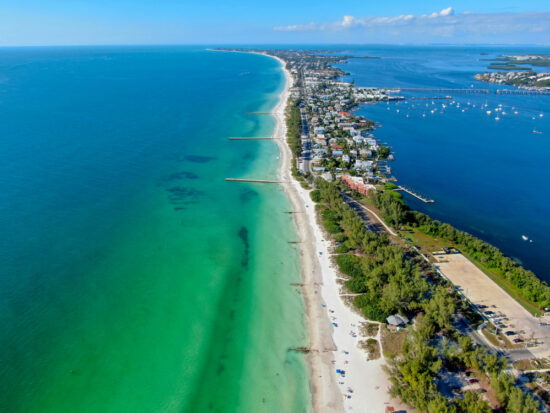
Out-of-state buyers relocating to or investing along Florida's Gulf Coast frequently view Anna Maria Island properties as hybrid assets capable of generating substantial vacation rental income. However, the barrier island does not operate under a single unified rental framework. Instead, it is divided into three separate municipalities: the City of Anna Maria, Holmes Beach, and Bradenton Beach. Each city enforces its own vacation rental ordinances, registration procedures, and enforcement protocols that supersede county-level rules.
Understanding exactly which municipal boundary an address falls within is the foundation of rental due diligence on the island. A regulatory permission granted in Bradenton Beach cannot be assumed to apply in Holmes Beach or the City of Anna Maria.
| Municipality | Primary Licensing & Approval | Key Operational Mandates |
|---|---|---|
| City of Anna Maria | DBPR License + City Registration (Ordinance 15-807) | Capped at lesser of 2/bedroom or 8 total guests; agent liability insurance required |
| Holmes Beach | Vacation Rental Certificate (2-year validity) | Mandatory code compliance inspection before marketing; zoning-specific minimum stays |
| Bradenton Beach | City Permit + DBPR License Proof | Submission of approved floor/parking plans; physical posting of permit on-site |
Evaluating City-Specific Rental Codes and Occupancy Limits
City of Anna Maria: Qualifying Bedrooms and Insurance
Under City of Anna Maria Ordinance 15-807, any home rented to the public more than three times per year for periods under 30 days requires both a state DBPR vacation rental license and city registration. The ordinance imposes strict occupancy limits: total occupancy is capped at the lesser of two persons per qualifying bedroom or eight total occupants, which includes day guests. To qualify as a bedroom under the ordinance, a room must measure at least 70 square feet and include a bed and a closet used for sleeping. Marketing a property above its licensed capacity is a violation.
Furthermore, the City of Anna Maria requires designated rental agents to maintain commercial general liability insurance with baseline minimums of $1,000,000 per occurrence and $1,000,000 general aggregate.
Holmes Beach: Two-Year Certificates and Inspections
In Holmes Beach, owners must secure a Vacation Rental Certificate, which remains valid for two years from issuance. Critical to the due diligence timeline, a property must pass a code compliance inspection before it is placed on the rental market or advertised. The city enforces strict parking allowances and distinct zoning overlays, where properties in certain zones are subject to minimum stay lengths, such as a one-week minimum or a 30-day (monthly) minimum rental zone.
Bradenton Beach: Document Submissions and Posting
Bradenton Beach requires proof of DBPR registration, an application for a city-issued permit, and the formal submission of detailed floor plans and parking plans. Once approved, the city permit must be physically posted in a visible location on the property.
Private Association Covenants and Infrastructure Checks
While municipal codes set the baseline legal requirements, private covenants can impose far tighter restrictions. Condo associations and homeowners associations (HOAs) across Anna Maria Island maintain independent bylaws that can restrict rental frequency, establish minimum stay durations that exceed municipal standards, cap guest counts, or prohibit short-term leasing entirely.
Tourist Development Tax and State Remittance Obligations
Rental accommodations leased for periods of six months or less on Anna Maria Island are subject to a cumulative 13% short-term rental tax. This is split into two distinct obligations:
- 7% Florida Sales and Use Tax: Remitted directly to the Florida Department of Revenue.
- 6% Manatee County Tourist Development Tax (TDT): Remitted directly to the Manatee County Tax Collector.
A common pitfall for out-of-state hosts is assuming that online booking channels automatically handle all lodging taxes. Manatee County is not contracted with Airbnb, VRBO, Evolve, or other third-party booking platforms to collect or remit Tourist Development Tax. Property owners or their designated agents are legally required to register with the Manatee County Tax Collector and remit the 6% TDT directly.
Total Rental Tax = 7% Florida Sales Tax + 6% Manatee County TDT
Gross Guest Charges × 0.13 = Total Tax Liability
Note: 6% County TDT Must Be Self-Remitted Directly to Manatee County
Structuring Purchase Contract Contingencies
Anna Maria Island Rental Feasibility Checklist
- Identify exact city jurisdiction (Anna Maria, Holmes Beach, or Bradenton Beach) and review relevant municipal ordinances.
- Verify qualifying bedroom dimensions (minimum 70 sq ft with closet/bed) against the maximum occupancy formula.
- Confirm zoning-specific minimum stay rules (e.g., 7-day vs. 30-day zones in Holmes Beach).
- Inspect physical off-street parking footprint against city-approved site plans.
- Review HOA/condo governing documents for private rental caps, duration minimums, or tenant approval rules.
- Confirm registration status with the Manatee County Tax Collector for direct 6% TDT remittance.
- Independently verify dock permitting, low-tide canal depth, and bridge clearances if advertising waterfront access.
Related Seaside Resources
See the relocation guides if you are moving to the Gulf Coast from out of state. See the waterfront homes we currently represent if you want to see how these trade-offs look on real Gulf Coast inventory. See the how we work with buyers and sellers if you want the representation side spelled out. See the Coastal Insights library for the rest of the series.
Frequently asked questions
Do major booking platforms collect the Manatee County Tourist Development Tax automatically?
No. Manatee County is not contracted with Airbnb, VRBO, or Evolve to collect or remit the 6% Tourist Development Tax. Property owners must register with the Manatee County Tax Collector and remit this tax directly.
How is maximum occupancy calculated in the City of Anna Maria?
Under Ordinance 15-807, occupancy is capped at the lesser of two persons per qualifying bedroom (minimum 70 square feet with a bed and closet) or eight total occupants, including day guests.
Can an HOA prohibit short-term rentals even if the city allows them?
Yes. Private HOA or condominium covenants and bylaws can enforce stricter rules than municipal codes, including minimum stay lengths or outright prohibitions on vacation rentals.