
In this guide
Two Distinct Approaches to Gulf Coast Living
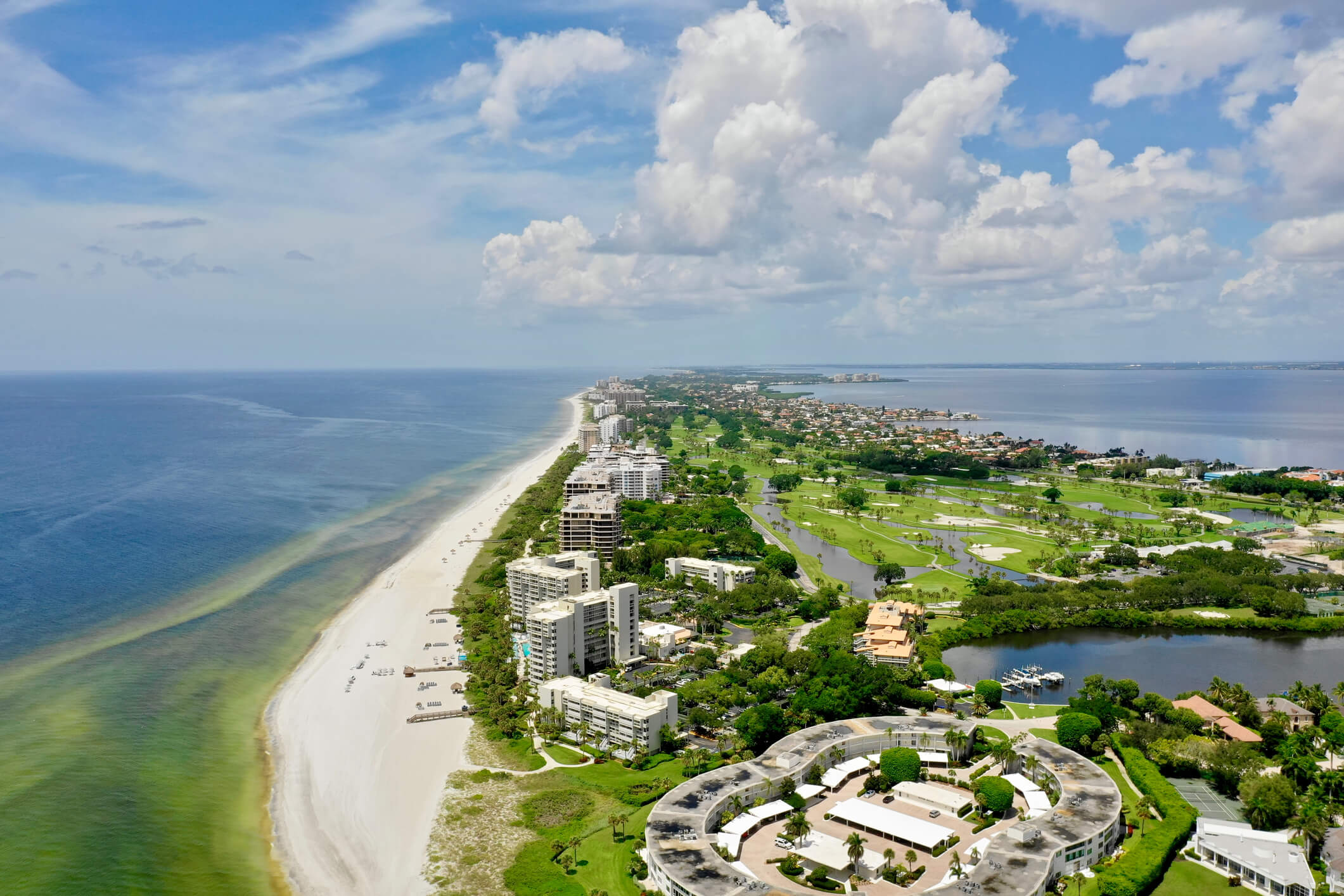
Out-of-state buyers relocating to Florida's Gulf Coast frequently weigh two distinct geographic profiles across Sarasota and Manatee counties: the established barrier islands (such as Longboat Key, Siesta Key, and Lido Key) and expansive inland master-planned developments (such as Lakewood Ranch, Palmer Ranch, and Skye Ranch). Each choice represents a fundamentally different ownership model, financial commitment, and day-to-day rhythm.
Sarasota's barrier islands emphasize direct beach proximity, private clubs like the Longboat Key Club, and established luxury waterfront estates along open bays and saltwater canals. In contrast, inland developments like Lakewood Ranch—spanning 33,000 acres across Sarasota and Manatee counties with roughly 72,000 residents, three town centers, and 150 miles of trails—focus on newer construction, comprehensive community amenities, and lower-maintenance residential layouts.
Daily Transit, Bridge Access, and Infrastructure
Daily convenience and accessibility represent one of the first operational divides that relocators experience. Barrier island residents rely on bridge crossings to reach downtown cultural venues, mainland commercial corridors, and regional medical centers. During peak travel seasons, bridge bottlenecks and coastal corridor traffic can significantly extend commute times.
Insurance Premiums and Ongoing Property Maintenance
The financial baseline of owning a home differs sharply between coastal flood zones and inland parcels. Coastal single-family homes on barrier islands face substantial windstorm and flood exposure. Longboat Key properties in FEMA VE flood zones routinely require $8,000 to $14,000 annually for flood insurance alone, compared to $4,500 to $7,500 for mainland Sarasota homes in AE zones. Total combined annual premiums—including homeowners, flood, and windstorm coverage—regularly range from $12,000 to more than $20,000 for coastal single-family residences.
Beyond insurance, direct exposure to saltwater and coastal weather creates continuous physical upkeep requirements that new inland builds avoid.
| Expense / Upkeep Category | Barrier Island Property | Inland Master-Planned Property |
|---|---|---|
| FEMA Flood Insurance | VE zones: $8,000–$14,000/year | Minimal to standard AE rates ($4,500–$7,500/year or non-mandatory X zone) |
| Total Combined Insurance Premiums | $12,000 to $20,000+ per year | Significantly lower standard homeowners and hazard rates |
| Exterior & Mechanical Maintenance | Accelerated wear from salt air, humidity, and coastal weather | Modern building codes, new roofs, HVACs, and energy-efficient systems |
| Condo / HOA Fee Structure | Condo associations often carry higher fees for elevators, coastal upkeep, and master policies | Tiered monthly HOA fees (e.g., $176–$900/month depending on village) |
Community Formats: Waterside Villages vs. Island Associations
Inland master-planned communities offer structured neighborhoods with varying maintenance scopes. In Lakewood Ranch's Waterside neighborhood, for example, village fee structures reflect distinct property formats:
- Nautique: Offers low-maintenance townhomes with monthly HOA fees of $176, community amenities including pickleball and a pool, and water-taxi transit to Waterside Place.
- Bungalow Walk: Features detached single-family residences with landscape maintenance included at approximately $190 per month.
- Wild Blue: Comprises luxury custom waterfront single-family homes ranging from the high $900s to over $4 million, with monthly HOA fees between $800 and $900 with maintenance included.
On barrier islands, condominiums and residential enclaves frequently bundle exterior building maintenance, elevator servicing, and master insurance policies into monthly dues, requiring buyers to carefully inspect association reserve funds and operational budgets.
Waterfront Views vs. Navigable Boating Access
A critical distinction for relocating buyers is the difference between lakefront aesthetic living and true maritime navigation. While developments like Waterside offer expansive lake views, community water taxis, and paddleboarding, their inland freshwater lakes do not connect to the Intracoastal Waterway or the Gulf of Mexico.
Related Seaside Resources
See the relocation guides if you are moving to the Gulf Coast from out of state. See the waterfront homes we currently represent if you want to see how these trade-offs look on real Gulf Coast inventory. See the how we work with buyers and sellers if you want the representation side spelled out. See the Coastal Insights library for the rest of the series.
Frequently asked questions
How do flood insurance costs compare between Longboat Key and inland mainland Sarasota?
Longboat Key single-family homes in FEMA VE flood zones routinely carry annual flood insurance costs between $8,000 and $14,000, whereas mainland Sarasota AE-zone properties generally average between $4,500 and $7,500 per year.
Can I navigate a powerboat from Waterside in Lakewood Ranch out to the Gulf of Mexico?
No. The freshwater lakes within Waterside and Lakewood Ranch are landlocked water bodies suited for small watercraft, paddleboarding, kayaking, and internal water taxis; they do not offer navigable access to Sarasota Bay or the Gulf of Mexico.
What amenities are included in master-planned communities like Lakewood Ranch and Palmer Ranch?
Lakewood Ranch spans 33,000 acres and includes 150 miles of trails, three town centers, sports complexes, and private clubs. Palmer Ranch encompasses central Sarasota neighborhoods surrounding the 12.5-mile Legacy Trail.